 Login
Login


 RM200M
 RM200M Dev Kit
 Integrity 150
 ST150M
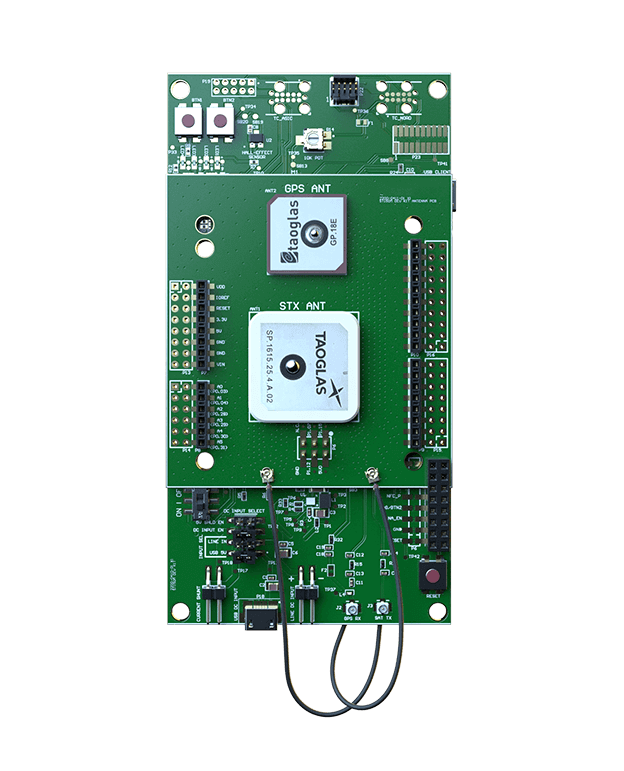 ST150M Dev Kit
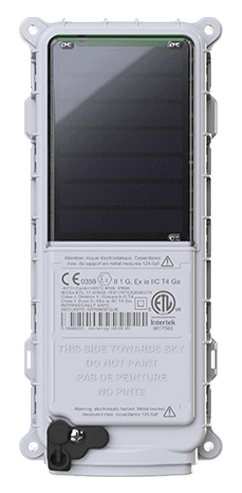 SmartOne Solar
 GSatSolar
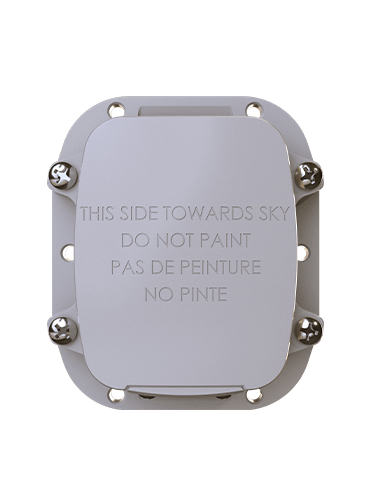 SmartOne C
 STX3
STX3 STX3 Dev Kit
 SPOT X
 SPOT Gen4
 SPOT Trace
 GSP-1700
 GSP-1600
Logistics: Why Two-Way IoT is the Key to Real-Time Fleet Optimization
For decades, logistics organizations have relied on connected technologies to answer one essential question: Where are my assets?
That visibility remains critical today. One-way IoT has transformed fleet and asset tracking by delivering reliable location updates from vehicles, trailers, containers, and equipment operating across vast geographic areas. For many applications, that information is exactly what's needed.
But as supply chains become more dynamic and customer expectations continue to rise, just knowing where an asset is no longer enough. Fleet managers increasingly need to influence what happens next.
This is where two-way IoT introduces an important new layer of operational capability, not by replacing one-way connectivity, but by expanding what's possible.
The global IoT-powered logistics market is expected to grow from approximately $59.3 billion in 2025 to more than $102 billion by 2030, reflecting organizations' growing investment in connected technologies that improve operational visibility, automation, and efficiency. Fleet management and asset tracking remain among the fastest-growing application segments.
From Visibility to Action
One-way IoT has proven its value by providing dependable reporting from remote assets. It enables organizations to monitor vehicle locations, verify deliveries, protect high-value equipment, and maintain visibility across supply chains, even in areas where terrestrial networks are unavailable.
For many fleets, that's the right solution.
However, logistics operations today face increasingly complex challenges:
- Unexpected weather events
- Traffic disruptions
- Route changes
- Equipment failures
- Cargo security concerns
- Rising customer expectations for accurate delivery updates
When operations change minute by minute, simply receiving data may not be enough. Organizations increasingly benefit from the ability to communicate with field assets, not only to collect information but also to respond.
Two-way IoT enables that next step.
Rather than acting as a passive reporting system, connected assets become active participants in fleet operations, driving action through receiving commands, acknowledging messages, and supporting remote decision-making.
Enabling Real-Time Fleet Optimization
Fleet optimization has traditionally focused on planning the most efficient route before a vehicle leaves the depot.
Today, optimization is increasingly happening while vehicles are already on the road.
With two-way IoT communications, logistics teams can:
- Send updated routes around road closures or severe weather
- Adjust delivery priorities throughout the day
- Confirm receipt of operational instructions
- Remotely control connected equipment
- Trigger or acknowledge alerts
- Request additional diagnostic information when anomalies occur
Instead of waiting for a vehicle to return, or relying on intermittent cellular coverage, operators can maintain an ongoing dialogue with assets operating almost anywhere.
That ability becomes particularly valuable for fleets serving remote locations, rural infrastructure, energy corridors, mining operations, agriculture, maritime environments, and cross-border transportation where terrestrial connectivity may be inconsistent.
Supporting Smarter Decisions
The value of two-way IoT extends beyond communication.
Continuous interaction with connected assets enables more responsive workflows throughout logistics operations.
For example, fleet managers can combine location information with operational data to make better decisions around:
If a refrigerated trailer begins sending control commands, such as temperatures outside acceptable thresholds, operators can investigate immediately, request additional readings, or issue operational instructions before product quality is compromised.
If a vehicle experiences abnormal engine diagnostics, maintenance teams can collect additional information remotely and determine next steps. If a catastrophic failure is possible, maintenance teams can remotely shut off an engine before damage occurs.
These faster decision cycles reduce downtime, minimize unnecessary service visits, and improve overall operational resilience.
Building More Resilient Supply Chains
Supply chain resilience has become a strategic priority across virtually every industry.
Organizations are looking beyond visibility toward operational agility, the ability to detect issues quickly, communicate instantly, and respond before disruptions escalate.
This shift is reflected in market investment. The global IoT fleet management market is projected to grow at a compound annual growth rate exceeding 16 percent through the end of the decade, driven by demand for real-time tracking, predictive maintenance, improved safety, and more efficient operations.
Satellite connectivity is becoming an increasingly important part of that evolution. As logistics operations expand into regions where cellular coverage cannot always be guaranteed, satellite-enabled IoT helps maintain business continuity by extending connectivity beyond traditional network boundaries.
Industry analysts estimate that satellite IoT connections reached approximately 7.5 million globally in 2024, with continued rapid growth expected as transportation, logistics, energy, and infrastructure organizations seek dependable communications for remote operations.
The Future of Connected Logistics
The future of fleet management isn't defined by one-way or two-way connectivity alone.
Instead, organizations are building connectivity strategies that match the operational needs of each asset. Some applications require simple, efficient reporting. Others benefit from real-time interaction that enables faster decisions, greater automation, and more resilient operations.
As logistics networks become increasingly distributed and customer expectations continue to accelerate, the ability to both receive information and respond intelligently will become an even more valuable competitive advantage.
For organizations looking to extend reliable communications beyond the reach of terrestrial networks, satellite-enabled two-way IoT can help unlock new levels of operational visibility, responsiveness, and fleet optimization, helping logistics teams stay connected wherever business takes them.
Ready to learn more? Reach out to our product team to learn the benefits of two-way satellite connectivity.