 Login
Login


 RM200M
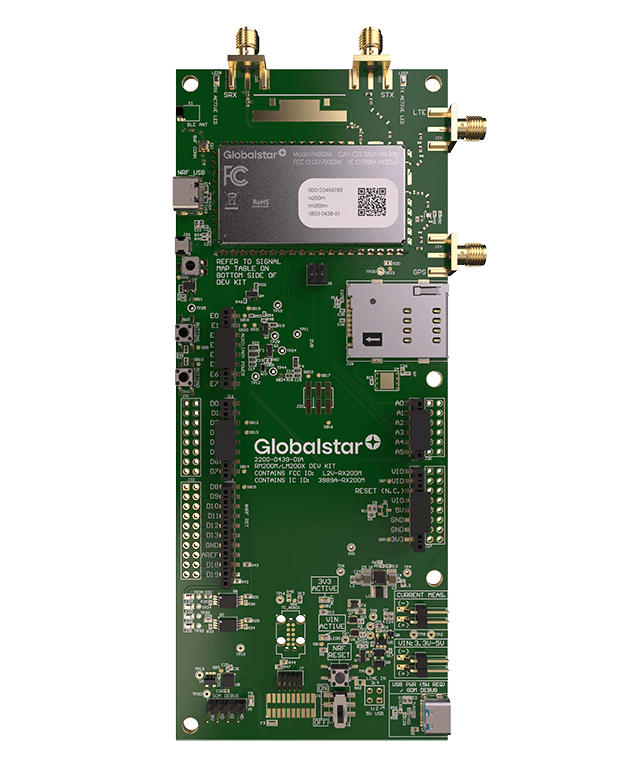 RM200M Dev Kit
 Integrity 150
 ST150M
 ST150M Dev Kit
 SmartOne Solar
 GSatSolar
 SmartOne C
 STX3
STX3 STX3 Dev Kit
 SPOT X
 SPOT Gen4
 SPOT Trace
 GSP-1700
 GSP-1600
The Shift Toward Multimode IoT Connectivity
As IoT deployments continue expanding into more distributed and infrastructure-variable environments, organizations are increasingly reevaluating how they approach connectivity.
For years, many remote monitoring and telemetry deployments were built around a single-network assumption, typically terrestrial cellular connectivity. In well-connected environments, that approach worked well. But modern operations no longer remain confined to predictable coverage areas.
Assets now move across rural transportation corridors, industrial sites, agricultural regions, utility infrastructure, and remote operational environments where connectivity conditions constantly change. Maintaining continuous operational visibility across these environments is becoming more difficult using terrestrial-only architectures alone.
According to the GSMA, hybrid terrestrial and non-terrestrial network (NTN) architectures are expected to become increasingly important as IoT deployments expand into remote and infrastructure-variable environments. As organizations prioritize resiliency and broader operational coverage, satellite-enabled connectivity is increasingly viewed as complementary to terrestrial infrastructure rather than separate from it.
This is one reason multimode IoT connectivity is gaining momentum across the industry.
Connectivity Requirements Are Changing
The modern IoT landscape looks very different from what it did even a few years ago. Organizations are increasingly prioritizing:
- Distributed operational visibility
- Remote telemetry
- Infrastructure resiliency
- Mobile asset awareness
- Real-time reactivity and remote remediation
- Continuity across changing environments
At the same time, operational footprints are becoming more geographically diverse. A single deployment may move through:
- Urban regions with strong cellular coverage
- Congested network areas
- Rural areas with inconsistent coverage
- Infrastructure-light industrial environments
- Remote operational corridors
Traditional single-network deployments often struggle to support these changing operational realities consistently.
The scale of connected operations is also expanding rapidly. GSMA Intelligence forecast global IoT connections will surpass 38 billion by 2030, increasingly distributed operational environments.
This is driving broader industry movement toward hybrid and multimode connectivity architectures capable of supporting both terrestrial and satellite communication strategies.
RM200M Was Designed for Flexible Connectivity Strategies
RM200M was developed to support organizations building more flexible remote monitoring and telemetry environments.
The module supports both satellite and terrestrial connectivity architectures, allowing developers and solution providers to design deployments capable of operating across multiple connectivity environments.
RM200M supports manual network switching, giving users direct control over connectivity. For deployments requiring automated or least-cost routing decisions, the Realm Enablement Platform provides the flexibility to develop custom switching logic tailored to specific operational requirements. Additionally, the module supports integration into broader multimode deployment strategies depending on operational requirements and architecture design. This flexibility allows organizations to:
- Extend visibility beyond terrestrial coverage
- Support remote monitoring across distributed environments
- Reduce operational blind spots
- Build more resilient telemetry architectures
- Support evolving hybrid connectivity strategies over time
Rather than treating satellite as a standalone edge-case solution, RM200M helps position satellite connectivity as part of a broader operational visibility architecture.
Satellite and Terrestrial Connectivity Serve Different Roles
One of the biggest misconceptions around multimode IoT is that satellite connectivity is intended to replace terrestrial networks entirely.
In practice, most organizations are moving toward layered connectivity models where different network types support different operational environments. For example:
- Cellular may support high-bandwidth or urban deployments
- Satellite may extend operational visibility into remote regions
- Hybrid architectures help maintain continuity across changing coverage environments
This approach allows organizations to optimize connectivity strategies based on operational realities rather than forcing every deployment into a single-network model.
RM200M supports this flexibility by enabling organizations to integrate satellite communications into broader IoT environments without requiring entirely separate operational architectures.
Operational Visibility Is Becoming More Important Than Network Preference
As organizations continue scaling IoT deployments, the market conversation is shifting.
The focus is becoming less about choosing a preferred network type and more about maintaining reliable operational visibility wherever operations occur. At the same time, organizations are becoming more strategic about how they use different networks. While network cost will always be a consideration, many businesses are recognizing that not every application requires high-bandwidth connectivity.
Steering traffic to the most appropriate network, using narrowband for low-data telemetry and reserving broadband for more data-intensive applications, can improve efficiency, optimize spectrum utilization and reduce overall connectivity costs. That shift is particularly important for industries such as:
- Utilities
- Transportation and logistics
- Agriculture
- Oil and gas
- Environmental monitoring
- Industrial IoT
According to Transforma Insights, satellite IoT connections are projected to grow from 8.8 million connections in 2024 to more than 46 million by 2034, reflecting increasing demand for connectivity beyond traditional terrestrial infrastructure.
In these environments, operational continuity often matters more than maximizing bandwidth or maintaining dependence on a single connectivity model. Organizations increasingly need:
- Reliable telemetry
- Visibility into distributed assets
- Infrastructure-independent communications
- More resilient monitoring architectures
Multi-carrier connectivity has already demonstrated its value over years of successful real-world deployments, providing organizations with greater resilience, availability and flexibility than relying on a single network. Extending that same approach to emerging technologies such as satellite is a natural evolution, enabling connected devices to maintain visibility across an even broader range of operating environments.
Rather than replacing terrestrial connectivity, multimode solutions complement existing network strategies by helping organizations move the right data over the right network at the right time. The result is more resilient operations, better use of available network resources and greater confidence that critical devices remain connected wherever business takes them.
Multimode Connectivity Supports Long-Term Deployment Flexibility
Another important advantage of multimode-capable architectures is long-term deployment flexibility.
Connectivity requirements rarely remain static throughout the lifecycle of an IoT deployment. As operations expand, assets move and infrastructure evolves, organizations need connectivity strategies that can adapt alongside changing operational requirements. Planning for this flexibility upfront can help reduce future deployment costs, simplify expansion and extend the useful life of connected devices. RM200M helps support this flexibility by enabling organizations to:
- Design deployments with broader operational coverage in mind
- Support hybrid operational environments
- Extend monitoring into infrastructure-limited regions
- Prepare for evolving multimode operational models
This flexibility also helps organizations adapt as connectivity infrastructure continues to mature. Terrestrial wireless networks will continue expanding into new regions as demand for connected devices justifies additional infrastructure investment. A multimode deployment can take advantage of that growth over time, dynamically utilizing available terrestrial networks where appropriate while maintaining satellite connectivity in areas where terrestrial coverage is unavailable or unreliable.
This approach helps future-proof deployments by allowing connectivity strategies, and associated costs, to evolve as network availability changes, without requiring organizations to redesign or replace deployed devices. This becomes increasingly valuable as organizations continue investing in:
- Control, remediation and near real-time response
- Distributed infrastructure monitoring
- Predictive maintenance
- AI-enabled operational intelligence
- Resilient operational continuity planning
By combining terrestrial and satellite connectivity within a single architecture, organizations can build IoT deployments that are designed not only for today's operating environments but also for the networks, technologies and business requirements of tomorrow.
The Future of IoT Connectivity Is Layered
The future of IoT will never rely on a single connectivity approach.
Instead, organizations are increasingly seeking layered, multipath, and redundant connectivity solutions where terrestrial and satellite technologies work together to support continuous operational visibility. RM200M supports this broader market shift today.
By supporting both satellite and terrestrial connectivity strategies, the module helps organizations move toward more flexible, resilient, and scalable operational architectures capable of supporting the realities of modern distributed operations.
Reach out to our product team to learn more.