 Login


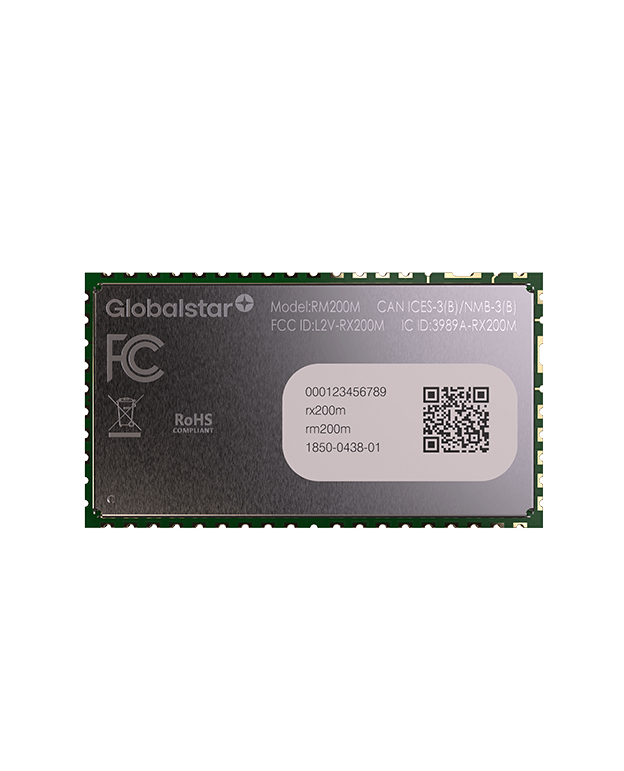 RM200M
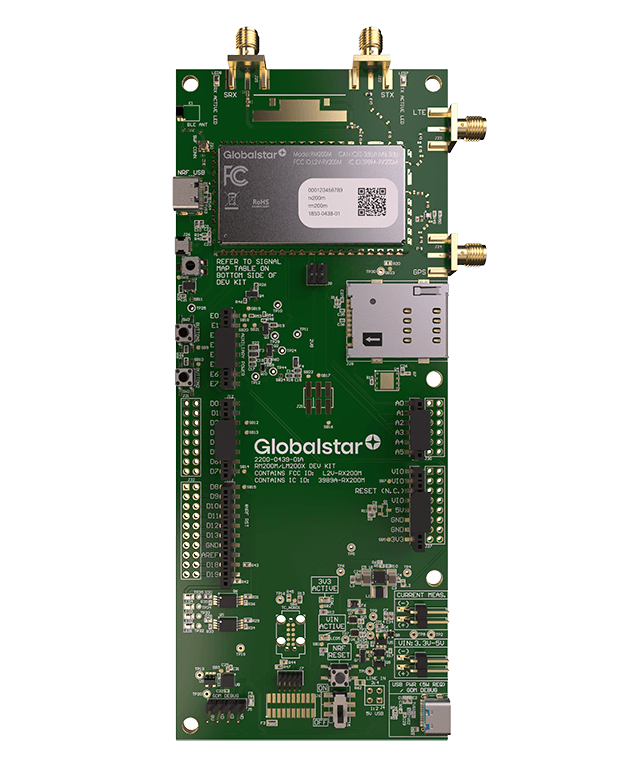 RM200M Dev Kit
 Integrity 150
 ST150M
 ST150M Dev Kit
 SmartOne Solar
 GSatSolar
 SmartOne C
 STX3
 STX3 Dev Kit

 SPOT X
 SPOT Gen4
 SPOT Trace

 GSP-1700
 GSP-1600
Five Common Technical Barriers to IoT Scaling and How to Overcome Them
Building a successful IoT proof of concept is one thing. Deploying hundreds or thousands of connected devices across real-world environments is another.
And the scale of IoT continues to grow. According to IoT Analytics, the number of connected IoT devices worldwide reached 18.5 billion in 2024 and was expected to grow 14% to 21.1 billion by the end of 2025. By 2030, that figure is projected to reach approximately 39 billion devices.
As IoT deployments scale, technical challenges that may have been manageable during development can become much more significant. Connectivity gaps, power consumption, device integration, data management, and ongoing maintenance can all affect performance and ultimately determine whether an IoT solution can scale successfully.
Understanding these challenges early can help developers and organizations design solutions that are ready to grow. Here are five common technical barriers to IoT scaling and considerations for addressing them.
1. Inconsistent Connectivity
An IoT device is only as useful as its ability to communicate.
A small pilot may operate entirely within dependable cellular or Wi-Fi coverage, but larger deployments often extend across broader geographies. Devices may travel between coverage areas or operate in rural, remote, or infrastructure-limited locations where terrestrial connectivity is inconsistent or unavailable.
Even as terrestrial networks expand, coverage gaps remain. GSMA reported in 2025 that approximately 4% of the global population still lived outside mobile broadband coverage. Importantly for IoT, population coverage does not account for the many uninhabited and sparsely populated areas where industrial, agricultural, transportation, maritime, and other remote assets may operate.
Designing connectivity around the actual operating environment is therefore essential. For applications extending beyond terrestrial networks, satellite connectivity can provide an important additional communications path. Multimode approaches that incorporate both terrestrial and satellite technologies can provide even greater flexibility as assets move between environments.
2. Power Consumption
Power requirements that seem reasonable for a handful of devices can become an operational challenge when thousands are deployed in the field.
Many IoT devices operate on batteries or have limited access to external power. Frequent communications, sensor activity, positioning, and local processing can all consume energy. If batteries need to be replaced too often, the maintenance cost and effort can quickly become difficult to manage at scale.
Power-efficient hardware is one part of the solution, but how a device operates matters too.
Research has demonstrated the potential impact of processing data closer to the source. One IoT environmental monitoring study found that an edge-computing approach reduced the amount of data transmitted by an average of 50% and increased battery life by 130% compared with its conventional sensor-monitoring approach.
Rather than transmitting continuously, devices can use event-driven logic to process information locally and communicate when something meaningful happens. This approach can reduce unnecessary transmissions and help conserve power while still providing the information an application requires.
3. Hardware and Software Integration Complexity
IoT devices should employ more than a single communications technology to create redundancy in data communications, especially in mission-critical applications. A solution may incorporate GNSS for positioning, Bluetooth® for nearby sensors, cellular and satellite connectivity, edge processing, and application-specific sensors.
Integrating those individual components can create complexity for developers.
Each additional component can introduce new hardware requirements, software interfaces, testing needs, and potential points of failure. That complexity can become even more significant when an organization moves from a prototype to thousands of deployed devices that must operate reliably for years.
More integrated hardware and unified development environments can help simplify this process. Consolidating capabilities into fewer components can reduce design complexity while giving developers a more consistent way to control communications, positioning, sensors, and edge functionality.
4. Managing Data at Scale
More connected devices inevitably create more data, but more data does not always mean more value.
If every device continuously sends every sensor reading to the cloud, organizations can quickly find themselves managing large volumes of information that may have little immediate value. That can increase communications requirements, power consumption, and backend processing demands.
Edge computing provides another approach.
By processing data locally, IoT devices can determine which information is significant before transmitting it. Instead of sending every reading, a device might communicate when a threshold is crossed, equipment changes state, or another predefined event occurs.
Recent research demonstrates just how significant selective transmission can be in certain applications. A 2026 Scientific Reports study of an anomaly-based edge computing approach using LoRa found that one tested method reduced transmitted data volume by 98.19 percent and energy consumption by 98.10 percent compared with full-data transmission.
Results will vary substantially by application, hardware, network, and data requirements, but the principle is important for IoT scaling: not every piece of raw data needs to travel to the cloud.
The goal is not simply to collect more data. It is to deliver the right actionable data at the right time.
5. Device Management and Maintenance
Scaling IoT does not end once devices are deployed.
Organizations must be able to monitor and manage devices throughout their operational lives. As a fleet grows from dozens of devices to thousands, configuration, troubleshooting, software management, and physical maintenance can become increasingly difficult.
In 2026, GSMA highlighted this challenge as IoT deployments continue to mature, noting that large IoT fleets increasingly require capabilities including remote provisioning, oversight, control, recoverability, and the ability to update devices remotely over long operational lifecycles.
Designing for manageability from the beginning is critical. Developers should consider how devices will be configured, updated, monitored, and serviced before they reach the field, not after deployment has already begun.
Reducing physical maintenance requirements through power-efficient design and remote device-management capabilities can also help make large deployments more sustainable.
Designing IoT for Scale
Successful IoT scaling requires more than adding devices to an existing deployment. Connectivity, power, integration, data processing, and device management all need to work together as part of the larger system.
Globalstar technologies are designed to help developers address many of these challenges. The RM200M, for example, combines multimode, two-way LEO satellite communication, multi-constellation GNSS, Bluetooth Low Energy (BLE), and edge processing capabilities in a compact architecture. Its Unified API enables developers to control GNSS, BLE, and software-defined radio functionality through a common interface, while local processing can support event-driven applications that use communications and power more efficiently.
With tens of billions of connected devices expected worldwide by the end of the decade, the challenge is no longer simply proving that IoT works. The challenge is building solutions capable of working reliably and efficiently at scale.
The most scalable IoT solutions are not simply designed to work today. They are designed from the beginning for where and how far they need to grow.
Learn more about the RM200M here.