 Login
Login


 RM200M
 RM200M Dev Kit
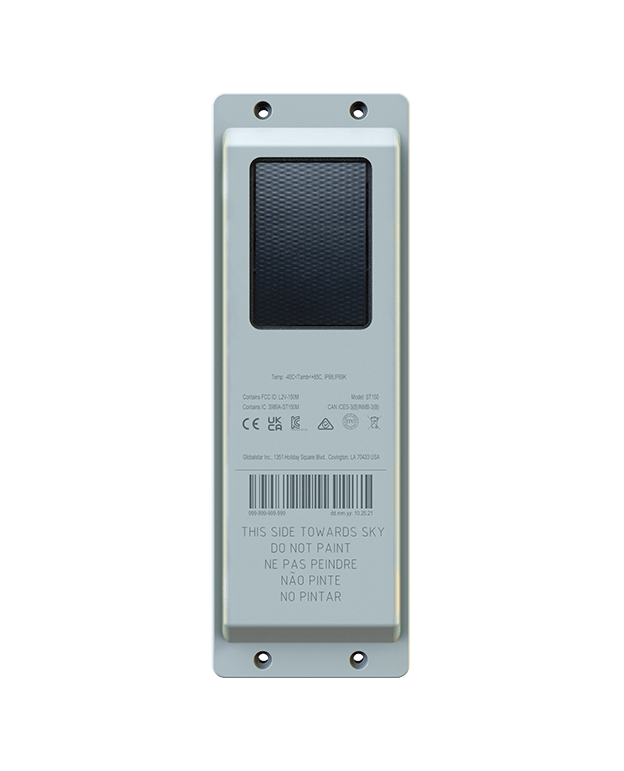 Integrity 150
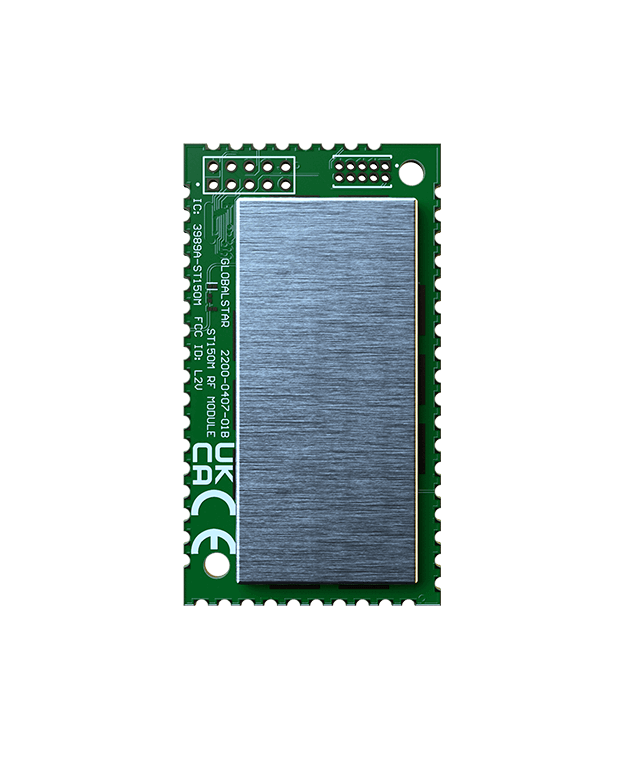 ST150M
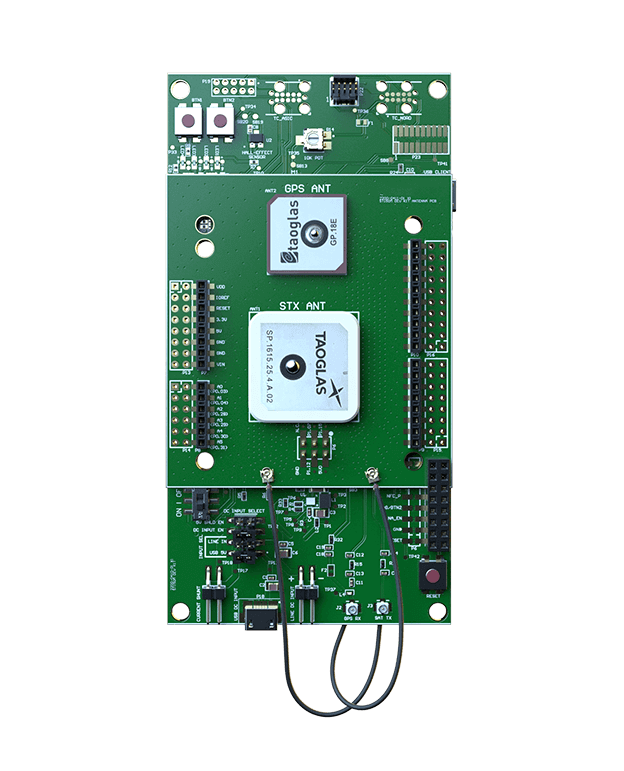 ST150M Dev Kit
 SmartOne Solar
 GSatSolar
 SmartOne C
 STX3
STX3 STX3 Dev Kit
 SPOT X
 SPOT Gen4
 SPOT Trace
 GSP-1700
 GSP-1600
Balancing Satellite and Terrestrial Connectivity in Modern IoT Deployments
Designing IoT deployments for real-world operating environments has become increasingly complex.
Modern connected systems rarely operate within a single, predictable coverage footprint. Assets move between urban centers, rural corridors, industrial facilities and remote operational environments where connectivity conditions vary significantly throughout the deployment lifecycle.
As a result, many engineering and IoT teams are reevaluating how they approach connectivity architecture.
Increasingly, the question has shifted from “Which network should we use?” to “How do we maintain operational visibility across changing network environments?”
This shift is driving growing interest in multimode IoT architectures capable of supporting both terrestrial and satellite connectivity strategies. Deloitte notes that operational resiliency initiatives increasingly include communications infrastructure capable of maintaining continuity during disruptions and infrastructure outages.
Real-World Deployments Rarely Match Ideal Coverage Maps
On paper, terrestrial connectivity often appears sufficient for many deployments. In practice, however, operational environments introduce challenges such as:
- Coverage inconsistency
- Infrastructure variability
- Terrain-related signal degradation
- Cross-border roaming complexity
- Temporary outages
- Congestion during peak operational periods
These issues become more visible as deployments scale geographically. For example:
- Utility infrastructure may extend across rural service territories
- Transportation assets may traverse remote freight corridors
- Agricultural equipment may operate beyond reliable coverage zones
- Industrial monitoring systems may exist in infrastructure-light regions
In many cases, intermittent connectivity becomes operationally acceptable until organizations begin depending on continuous telemetry and real-time operational visibility. At that point, connectivity gaps become operational blind spots.
Multimode Architectures Help Reduce Infrastructure Dependency
Multimode IoT approaches help engineering teams design deployments capable of operating across broader connectivity conditions.
Rather than forcing all assets to depend entirely on terrestrial infrastructure, multimode architectures allow deployments to support both terrestrial and satellite communication pathways depending on operational requirements. This flexibility can help:
- Extend operational visibility into remote environments
- Reduce single-network dependency
- Improve continuity across changing conditions
- Support more resilient telemetry architectures
- Simplify monitoring across distributed operations
Importantly, multimode strategies are not necessarily about constant network switching. In many deployments, they are about designing systems capable of supporting multiple operational connectivity scenarios over time.
Satellite and Terrestrial Networks Have Different Operational Strengths
One of the most important architectural considerations is recognizing that satellite and terrestrial networks solve different problems.
Terrestrial Connectivity Strengths:
- High bandwidth capacity
- Lower cost in dense coverage environments
- Strong support for urban and facility-based deployments
- Existing operational familiarity
Satellite Connectivity Strengths:
- High bandwidth capacity
- Lower cost in dense coverage environments
- Strong support for urban and facility-based deployments
- Existing operational familiarity
ABI Research identifies remote monitoring and asset visibility as some of the fastest-growing industrial IoT applications, particularly across transportation, utilities, and industrial operations. Modern IoT deployments increasingly benefit from leveraging both approaches rather than treating them as mutually exclusive architectures.
This is especially true for organizations operating:
- Distributed infrastructure
- Mobile fleets
- Remote industrial operations
- Environmental monitoring systems
- Infrastructure spanning multiple geographies
RM200M Supports Flexible Connectivity Design Strategies
The RM200M module was designed to support organizations building more flexible remote monitoring architectures.
The module supports both satellite and terrestrial connectivity approaches, allowing developers and solution providers to integrate satellite capability into broader IoT deployment strategies.
RM200M also supports multimode deployment architectures depending on how the solution is designed and integrated operationally.
This allows engineering teams to:
- Extend monitoring into remote operating regions
- Design hybrid telemetry environments
- Support infrastructure-variable deployments
- Reduce operational blind spots
- Prepare for evolving multimode operational models
The flexibility is particularly valuable for deployments where operational conditions are expected to evolve over time.
Low-Bandwidth Telemetry Often Benefits Most from Multimode Approaches
Many remote monitoring applications do not require continuous broadband connectivity. Instead, they rely on:
- GPS location updates
- Sensor telemetry
- Status messages
- Event-driven reporting
- Environmental monitoring data
These low-bandwidth applications are often ideal candidates for multimode architectures because maintaining operational continuity matters more than maximizing throughput.
Examples include:
- Remote asset tracking
- Utility monitoring
- Industrial telemetry
- Agriculture monitoring
- Fleet visibility
- Environmental sensing
In these environments, intermittent connectivity loss can disrupt operational awareness even when data requirements themselves are relatively lightweight.
Resiliency Is Becoming a More Important Design Priority
Another major factor driving multimode adoption is operational resiliency. Engineering teams are increasingly being asked to design systems capable of:
- Maintaining visibility during outages
- Supporting distributed infrastructure
- Reducing operational downtime
- Improving continuity during infrastructure disruption
This shift reflects broader changes happening across operational technology environments where connectivity is now directly tied to:
- Operational continuity
- Safety
- Asset utilization
- Predictive maintenance
- Real-time operational decision-making
As a result, connectivity architecture is becoming more strategic rather than simply a transport-layer consideration.
The Future of IoT Architecture Is Increasingly Hybrid
The future of IoT connectivity will likely not revolve around a single network type.
Instead, deployments are increasingly moving toward layered architectures where terrestrial and satellite technologies support different operational requirements within the same environment.
For engineering teams, this means designing connectivity strategies around operational realities rather than idealized coverage assumptions.
Multimode architectures help support that shift by enabling:
- Greater deployment flexibility
- Broader operational coverage
- More resilient monitoring environments
- Reduced infrastructure dependency
As distributed operations continue expanding, the ability to balance terrestrial and satellite connectivity will become increasingly important for maintaining reliable operational visibility across modern IoT environments.
Ready to learn more? Reach out to our team for more information.